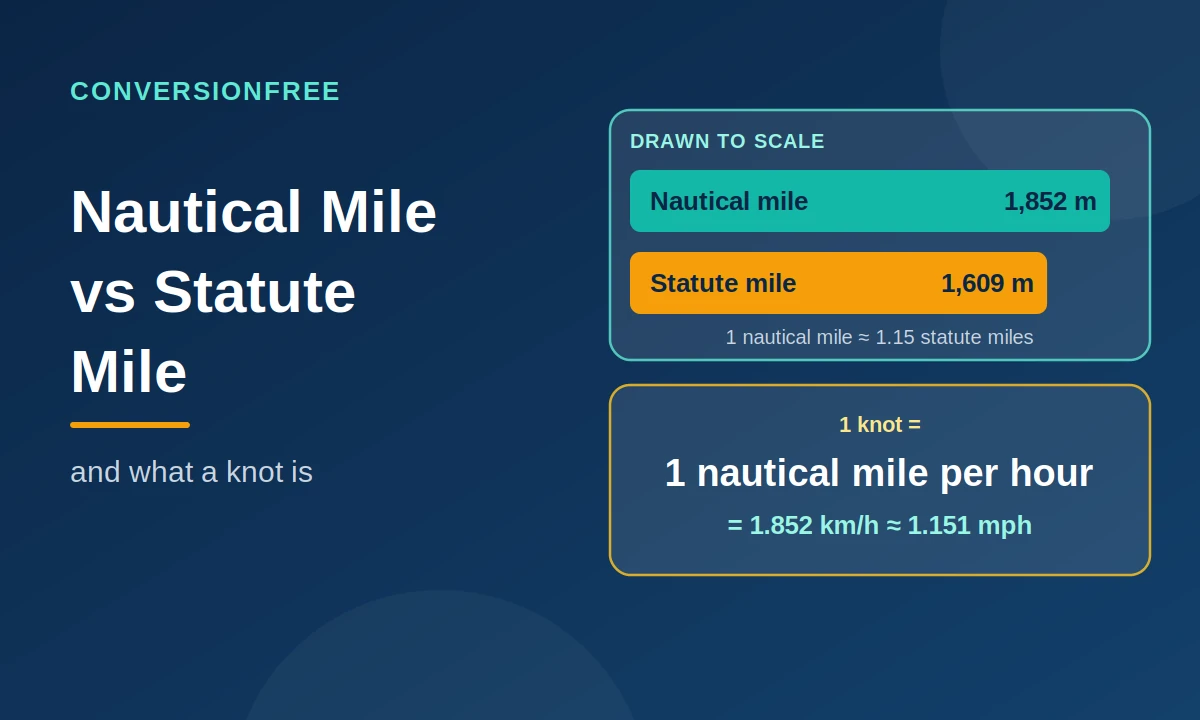
Quick answer: A nautical mile is exactly 1,852 metres (1.852 km). A statute mile, the everyday “mile” on roads, is 1,609.344 metres. So 1 nautical mile ≈ 1.1508 statute miles, about 15% longer. A knot is a speed of one nautical mile per hour, which is 1.852 km/h or about 1.151 mph.
The nautical mile is the standard for ships and aircraft, and the statute mile is for land. The length converter includes both, so you can switch between them in one step.
Key takeaways
- 1 nautical mile = 1,852 m = 1.852 km ≈ 1.15078 statute miles ≈ 6,076 ft.
- 1 statute mile = 1,609.344 m ≈ 0.869 nautical miles.
- 1 knot = 1 nautical mile per hour. “Knots per hour” is incorrect.
- One degree of latitude is about 60 nautical miles (about 111 km).
- Quick conversions: nautical miles × 1.15 = statute miles; knots × 1.15 = mph; knots × 1.85 = km/h.
What Is a Statute Mile?
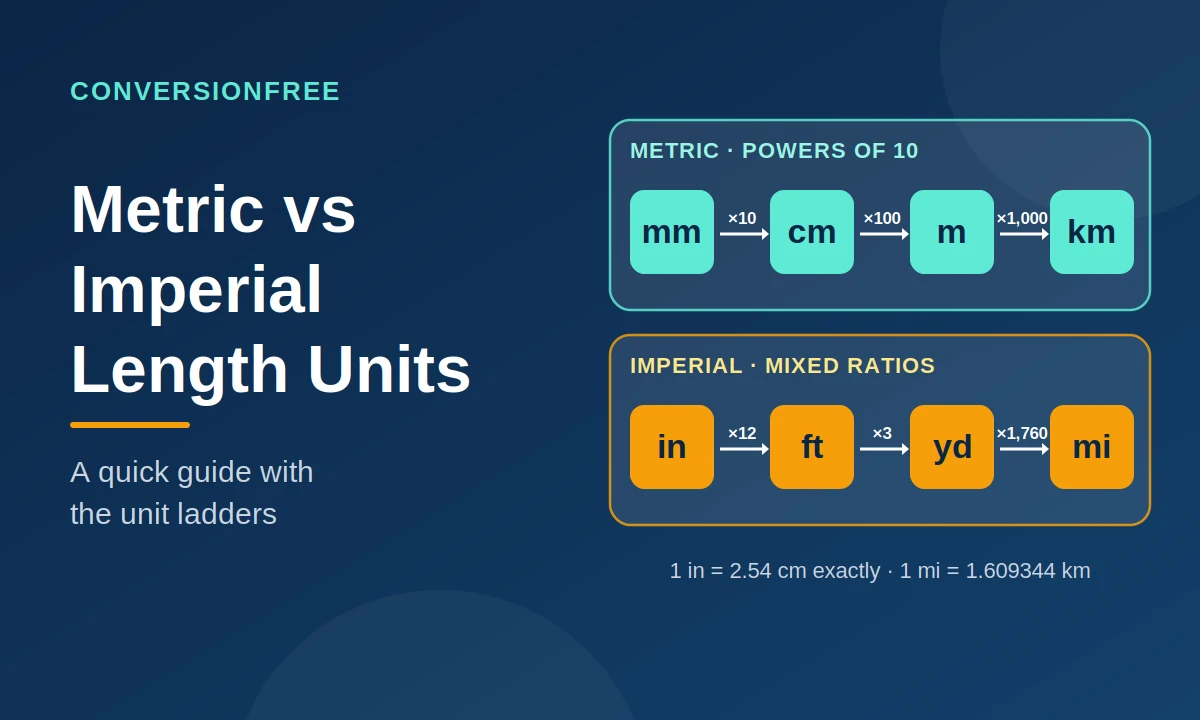
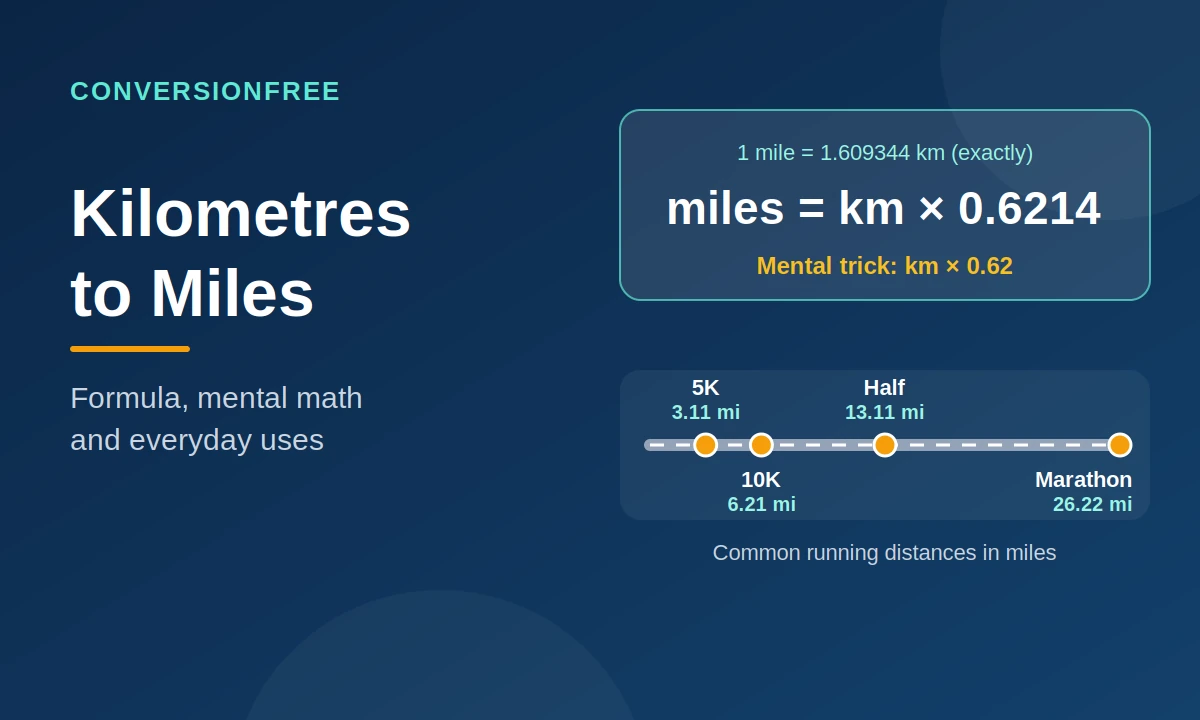
A statute mile is the ordinary mile used for road distances in the United States and the United Kingdom. It’s 5,280 feet, 1,760 yards or exactly 1,609.344 metres. We cover how it fits with the other imperial units in metric vs imperial length units, and how to convert it in kilometres to miles.
What Is a Nautical Mile?
A nautical mile is a unit of distance used in sea and air navigation. It’s defined as exactly 1,852 metres.
It was originally tied to the Earth itself. One minute of arc of latitude is about one nautical mile. There are 60 minutes in a degree, so one degree of latitude spans about 60 nautical miles, or roughly 111 km.
That link is why navigators like it: if you can read latitude on a chart, you can read distance from the same scale. (The link is approximate, because the Earth isn’t a perfect sphere. The unit itself is fixed at 1,852 m by international agreement. Verify the history before publishing.)
Nautical Mile vs Statute Mile: Side by Side
| Feature | Nautical mile | Statute mile |
|---|---|---|
| Symbol | nmi (or NM) | mi |
| In metres | 1,852 m | 1,609.344 m |
| In kilometres | 1.852 km | 1.609344 km |
| In feet | about 6,076.1 ft | 5,280 ft |
| In statute miles | about 1.1508 | 1 |
| In nautical miles | 1 | about 0.8690 |
| Used for | Ships, aircraft, charts | Roads, land distances |
| Origin | One minute of latitude (approximately) | Older land measure |
Rule of thumb: the nautical mile is about 15% longer.
How to Convert Nautical Miles to Miles and Kilometres
Statute miles = nautical miles × 1.15078
Kilometres = nautical miles × 1.852
Nautical miles = kilometres ÷ 1.852
Nautical miles = statute miles × 0.868976
| Nautical miles | Kilometres | Statute miles |
|---|---|---|
| 1 | 1.85 | 1.15 |
| 5 | 9.26 | 5.75 |
| 10 | 18.52 | 11.51 |
| 50 | 92.60 | 57.54 |
| 100 | 185.20 | 115.08 |
| 500 | 926.00 | 575.39 |
Mental math: to turn nautical miles into statute miles, add about 15%. 100 nmi + 15% = 115 miles (exact: 115.08).
What Is a Knot?
A knot is a unit of speed: one nautical mile per hour.
1 knot = 1.852 km/h = 1.15078 mph = 0.5144 m/s
The word comes from an old way of measuring a ship’s speed with a rope that had knots tied at regular spaces, and counting how many ran out in a fixed time. (Verify the history before publishing.)
“Knots per hour” is a mistake
A knot already means “per hour”. Saying “20 knots per hour” would describe acceleration, not speed. The correct phrase is simply “20 knots”.
Knots to mph and km/h
| Knots | km/h | mph | m/s |
|---|---|---|---|
| 5 | 9.26 | 5.75 | 2.57 |
| 10 | 18.52 | 11.51 | 5.14 |
| 15 | 27.78 | 17.26 | 7.72 |
| 20 | 37.04 | 23.02 | 10.29 |
| 30 | 55.56 | 34.52 | 15.43 |
| 50 | 92.60 | 57.54 | 25.72 |
| 100 | 185.20 | 115.08 | 51.44 |
Mental tricks:
- Knots to mph: add 15%. 20 knots + 3 = 23 mph (exact: 23.02).
- Knots to km/h: double it, then take off about 7.5%. 20 knots → 40 − 3 = 37 km/h (exact: 37.04).
For other speed units, use the speed converter. (Check that it lists knots before you keep this link.)
Why Do Ships and Planes Use Nautical Miles?
Three practical reasons explain it:
- Charts match the unit. Distance can be read straight off the latitude scale.
- Speed and distance stay simple. At a speed in knots, distance in nautical miles equals speed × hours, with no conversion.
- A common standard. Using one unit internationally avoids mix-ups between crews.
Worked example: a ship covers 120 nautical miles at 15 knots.
- Time = 120 ÷ 15 = 8 hours.
- In kilometres: 120 × 1.852 = 222.24 km, at 27.78 km/h.
Another: sailing at 12 knots for 5 hours covers 12 × 5 = 60 nautical miles (111.12 km).
Nautical Mile vs Statute Mile: Where Do You See Each?
- Nautical mile and knots: sea charts, shipping, and aviation (airspeed and flight distances).
- Statute mile: road signs and speed limits in the US and UK, running distances and land maps.
Some pilots and sailors work in both, which is why conversions come up often. For land-based distances in other units, see our guide to kilometres to miles.
Common Mistakes
- Treating a nautical mile as 1.609 km. That’s the statute mile. A nautical mile is 1.852 km.
- Saying “knots per hour”. A knot is already a speed.
- Mixing up mph and knots when comparing speeds: 100 knots is about 115 mph.
- Assuming longitude works like latitude. The one-minute rule applies to latitude only. Degrees of longitude get shorter toward the poles.
- Rounding too early in a passage plan.
Nautical Mile vs Statute Mile: FAQs
How many km is a nautical mile?
1.852 km, exactly.
How many statute miles is a nautical mile?
About 1.15078.
Is a nautical mile longer than a mile?
Yes, about 15% longer.
How many feet is a nautical mile?
About 6,076.1 feet.
What is a knot in mph?
1 knot ≈ 1.151 mph.
How do I convert knots to km/h?
Multiply by 1.852.
Why is it called a knot?
It comes from an old speed-measuring method using a knotted rope.
How many nautical miles is one degree of latitude?
About 60, or roughly 111 km.
Do I use nautical miles on land?
No. Roads use kilometres or statute miles.
Convert Nautical and Statute Miles in Seconds
You can convert between nautical miles, statute miles, kilometres and many other units with the ConversionFree length converter. To see how these units relate to the rest of the imperial system, read metric vs imperial length units. Our other measurement conversion tools are on the hub, and you’ll find more free calculators on the ConversionFree.